Writing Guide
Writing a Guided Research Commentary (Introductory Level)
For the introductory level, you will be developing foundational skills in neuroscience research. Based on our guided exercise, you will write a research commentary of 500-1000 words summarizing your analyses, observations, and interpretations.
Writing a Research Manuscript (Advanced Level)
Writing a scientific report may feel unfamiliar if this is your first research project. Fortunately, many of the skills used by professional researchers can be learned through practice and guidance.
For the Advanced Level of both competition tracks, your written report will take the form of a research manuscript. We encourage you to communicate your research in a format similar to that used by scientists when sharing their work with the broader research community in a peer-reviewed journal.
Below is a concise guide to writing a research paper produced by the Taylor & Francis Group (2021), one of the world’s largest academic publishing companies. The guide provides practical advice on structuring a scientific manuscript, as well as tips for communicating research clearly and effectively. For the competition, your written report will include an introduction, methods, results, discussion, conclusion, and abstract, and title.
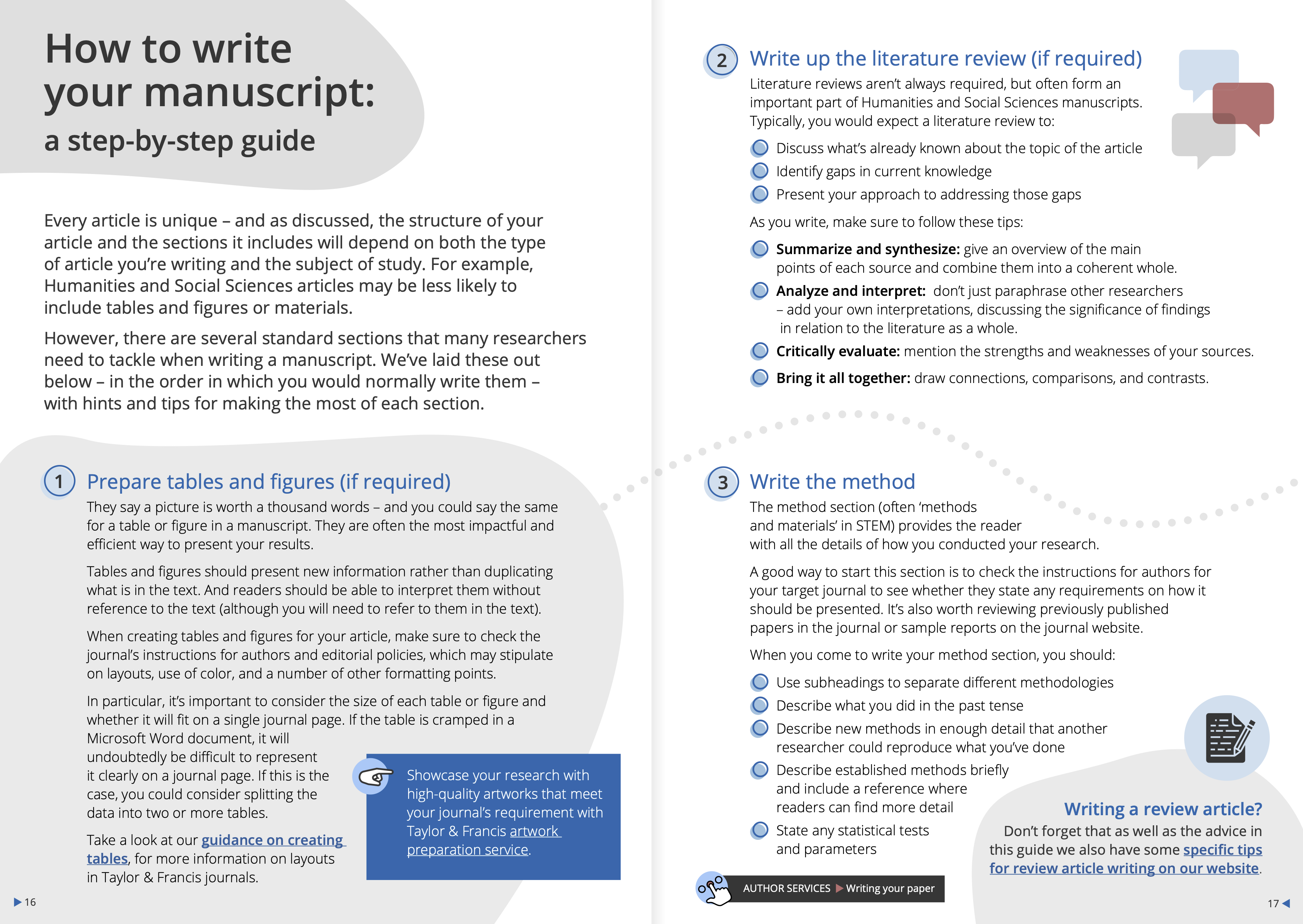
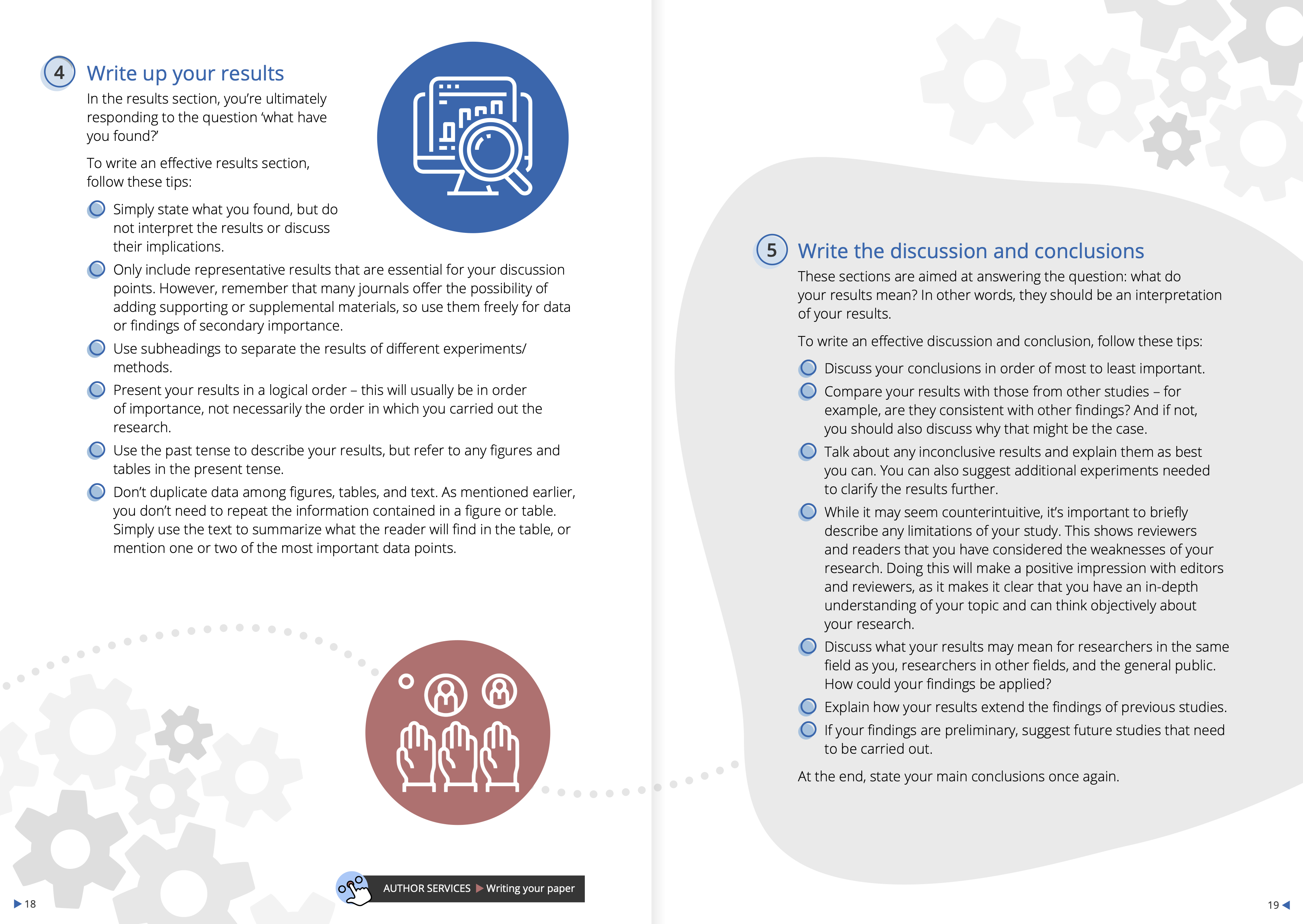
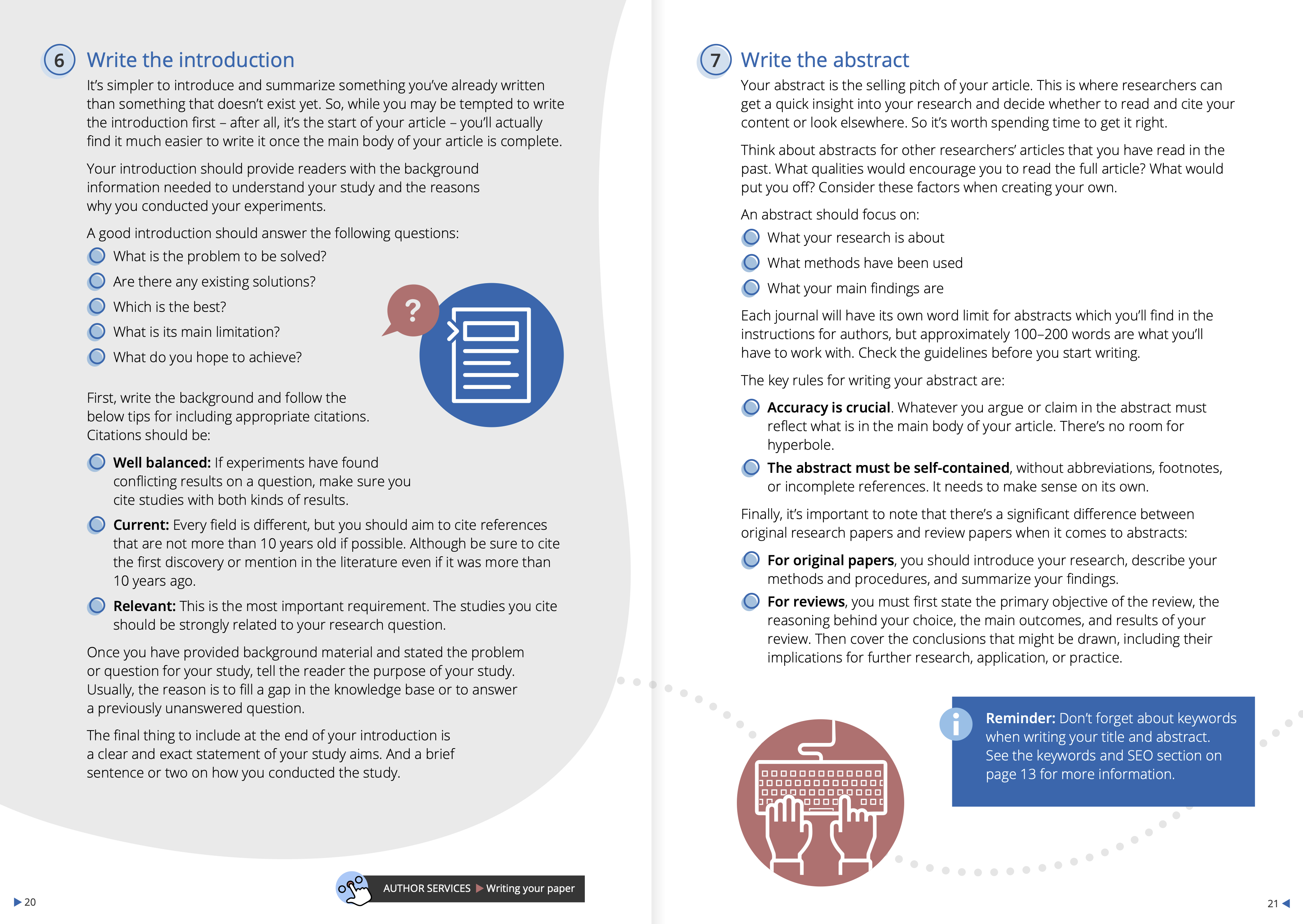
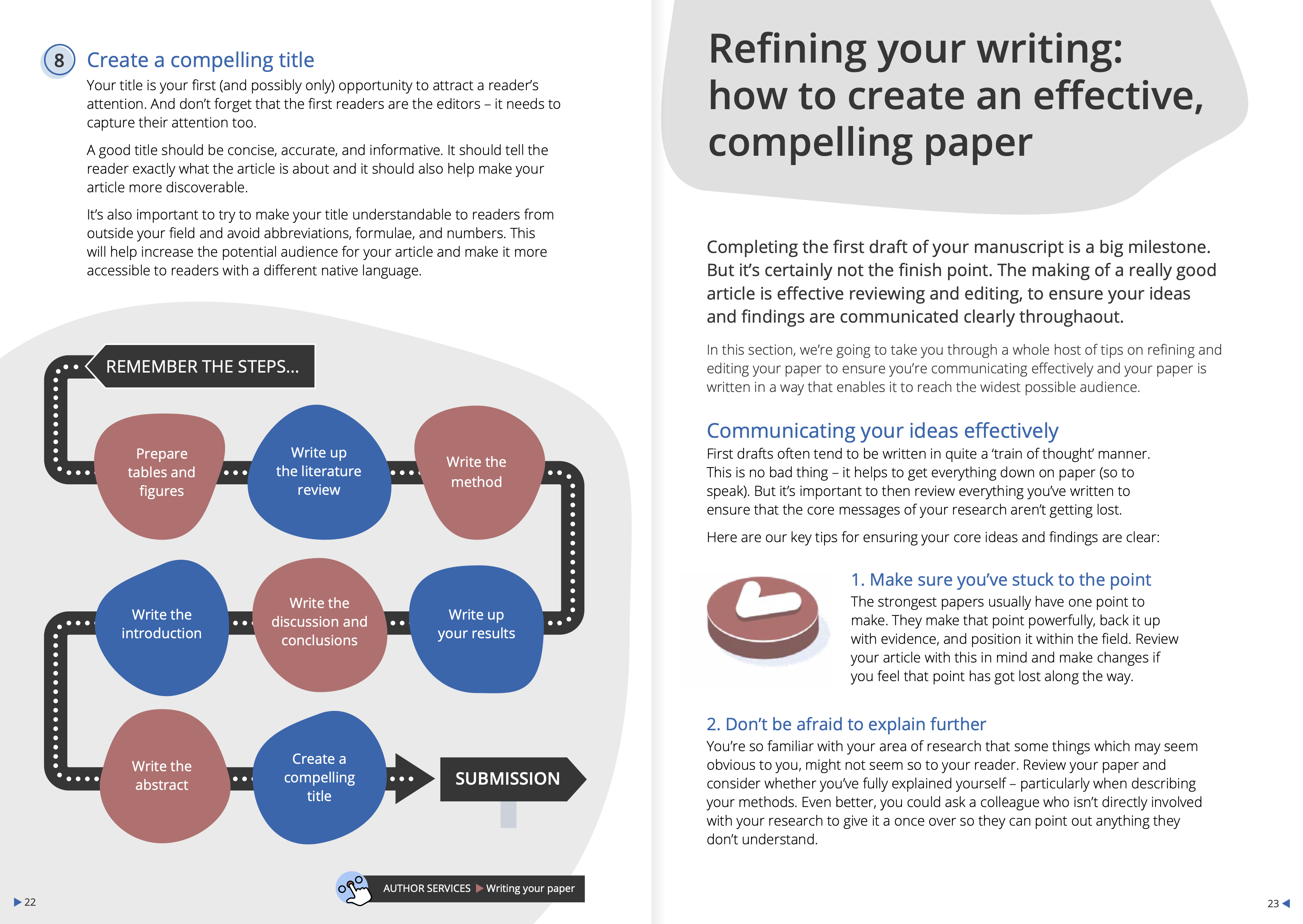
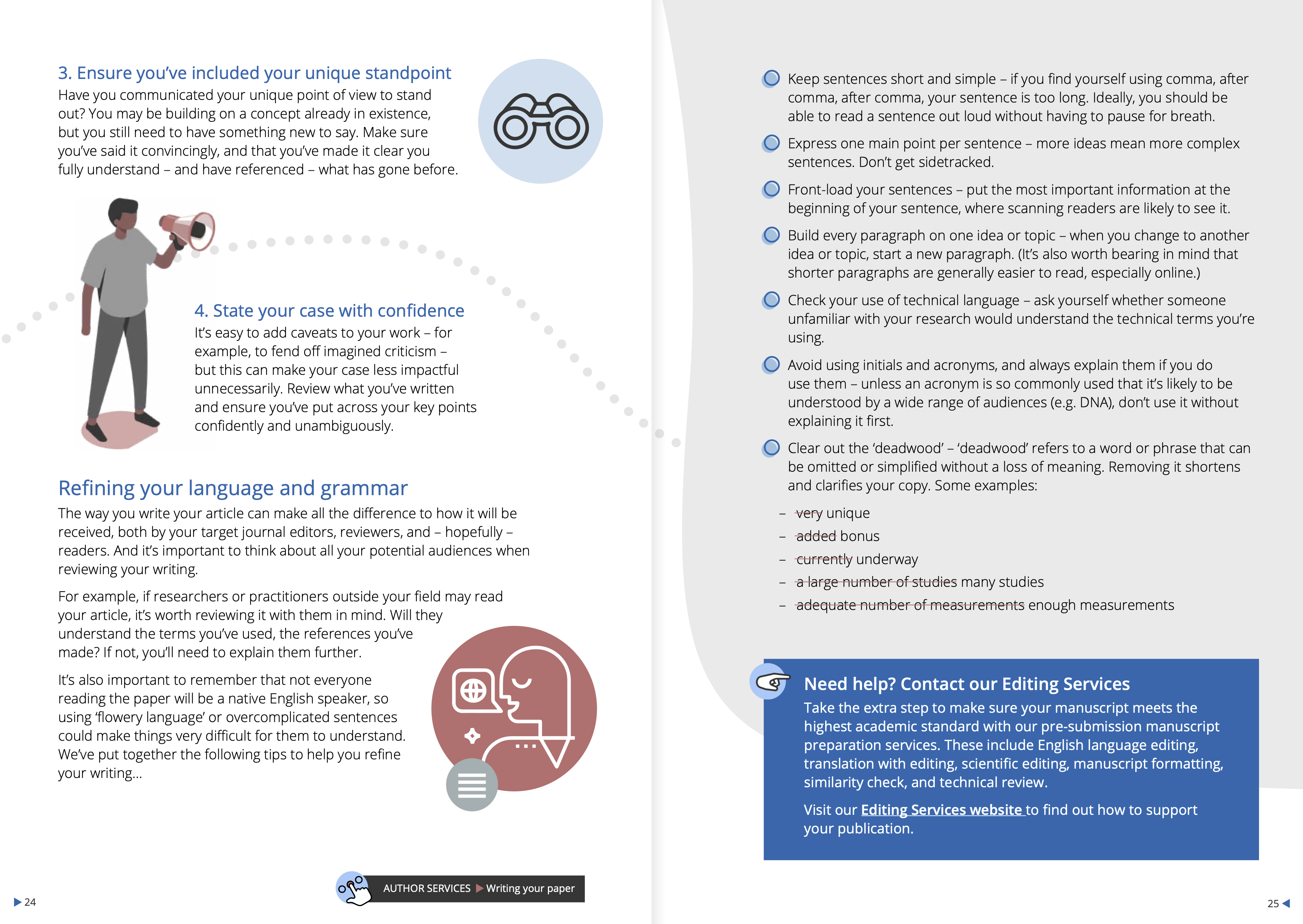
If the image does not display correctly, you can open it directly here.
Word Count
The expected word count varies depending on the level of submission:
Introductory Level: approximately 500–1,000 words
Advanced Level: approximately 2,000–4,000 words
These ranges are intended as guidelines. There is no formal word limit for either level. However, scientific communication is most effective when it is concise and focused. We therefore recommend that participants do not exceed 7,000 words, unless there is a compelling reason to do so.
If you need to write an abstract (i.e., for advanced level submissions) we recommend that the abstract be no longer than 350 words.
Formatting Requirements
There are no strict formatting requirements for written reports submitted to Connectome 2026–2027.
Participants are welcome to use any formatting style, provided that the report is clear, readable, well-organized, and consistent throughout.
That said, if you are unsure where to begin, the following conventions are commonly used in academic writing:
Font: Times New Roman, Arial, or Calibri.
Font size: 11–12 pt
Line spacing: 1.5 or double-spaced
Page margins: approximately 1 inch (2.54 cm) on all sides
Page numbering: recommended for longer reports
Section headings: clearly labeled and used consistently
Ultimately, judges will evaluate the content of your work rather than the specific formatting choices you make. However, it is important that you communicate your ideas and findings clearly and professionally.
Section Headings
For Advanced-Level submissions, we additionally recommend including clear section headings such as:
Abstract
Introduction
Methods
Results
Discussion
Acknowledgement
Declaration of Generative AI and AI-assisted technologies in the writing process
References
A Note on Manuscript Structure
The section order above follows a conventional manuscript structure:
Abstract → Introduction → Materials and Methods → Results → Discussion
However, you may notice that many published neuroscience papers use a different format:
Abstract → Introduction → Results → Discussion → Materials and Methods
Placing the Materials and Methods at the end of the manuscript is common in many scientific journals, particularly in neuroscience and the life sciences. This allows readers to focus on the motivation and findings first, while the methodological details are presented later.
You are welcome to adopt either structure for your report. If this is your first research manuscript, however, we strongly recommend keeping the Materials and Methods before the Results. Regardless of the order you choose, ensure that all methodological details are described clearly enough for another researcher to reproduce your analysis.
Generative AI
You are required to have “Declaration of Generative AI and AI-assisted technologies in the writing process” section heading in your report, even if you have not used generative AI. Note that participants will not be penalized for the responsible and transparent use of generative AI tools.
For more details, please read Generative AI subsection.
References and Citation
Please make sure to appropriately acknowledge any research papers, datasets, software tools (e.g., Neuroglancer and neuPrint), figures, images, or other resources that you use in your report. Giving credit to the work of others is an important part of scientific research and allows readers to trace the sources of information, ideas, and methods used in your project.
If you are unfamiliar with academic referencing, we recommend reviewing the following guide:
Newcastle University Academic Skills Kit: Referencing
https://
What is Referencing?
In brief, referencing means acknowledging the sources of information that you have used in your work.
This is generally a two-step process:
1. In-Text Citation
When referring to information, ideas, methods, datasets, or findings from another source, include a citation within the text of your report.
For example:
The complete adult Drosophila brain connectome was recently reconstructed using electron microscopy data (Scheffer et al., 2020).
In this example, (Scheffer et al., 2020) is an in-text citation. It identifies the authors and publication year of the source from which the information originated. You insert the citation within the sentence to indicate the source of the information. In this case, the citation refers to the study by Scheffer and colleagues in 2020 (https://doi.org/10.7554/eLife.57443), and it is formatted in APA style as (Scheffer et al., 2020).
There are many citation styles, including APA, Harvard, MLA, and Vancouver. You are welcome to use any citation style, provided that you remain consistent throughout your report.
2. Reference List
At the end of your report, include a References section containing the full bibliographic information for every source cited in the text. For example, the full APA-style reference would be:
What Should Be Referenced?
As a general rule, you should provide references for:
Research papers and review articles
Datasets
Software tools and platforms (e.g., Neuroglancer, neuPrint)
Figures, images, and visualizations that you did not create yourself
Books, websites, and online resources
Methods, concepts, or ideas that originate from another source
When in doubt, it is usually better to provide a citation than to omit one.
Proper referencing is a fundamental part of scientific integrity and helps ensure that credit is given to the researchers and communities whose work supports your own.
Example: Citing neuPrint and Neuroglancer
If you use neuPrint or Neuroglancer in your analyses, visualizations, or report, we encourage you to cite the corresponding resources.
neuPrint
APA Style Reference
Plaza, S. M., Clements, J., Dolafi, T., Umayam, L., Neubarth, N. N., Scheffer, L. K., & Berg, S. (2022). neuPrint: An open access tool for EM connectomics. Frontiers in Neuroinformatics, 16, 896292. https://doi.org/10.3389/fninf.2022.896292
Neuroglancer
APA Style Reference
Maitin-Shepard, J. (2020). Neuroglancer [Computer software]. https://
We recognize that there are multiple ways to cite software tools. The examples above are provided as recommended citations for participants who use neuPrint or Neuroglancer in their projects.